
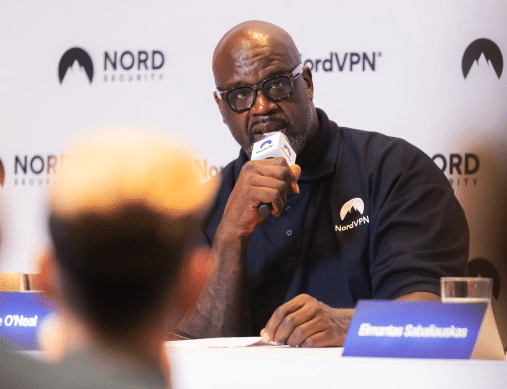
Shaquille O’Neal knows a little something about playing center. After all, the four-time NBA champion spent nearly two decades overpowering defenders, destroying backboards, and making very large professional athletes look suspiciously small.
So when Shaq talks about the evolution of big men, it’s probably wise to listen.
During a visit to Lithuania as an ambassador for NordVPN, O’Neal was asked why international centers have become so prominent while American-born big men have struggled to reach the same level of recognition.
Shaq’s answer came down to one major difference: fundamentals.
He explained that European players tend to be more fundamentally sound and are taught to think their way through the game. American players may possess greater speed, jumping ability, and natural athleticism, but they often lean more heavily on those physical gifts.
Coming from Shaq—the man who once used his physical gifts like a basketball wrecking ball—that observation carries some weight. Quite a lot of weight, actually.
According to O’Neal, international big men have traditionally been comfortable stretching the floor, shooting from outside, defending multiple areas, and playing with toughness. That combination has helped reshape the modern game.

Shaq pointed to Nikola “The Joker” Jokić and Joel Embiid as examples of dominant centers born outside the United States. Both can score around the basket, shoot from distance, pass the ball, and control a game without relying entirely on raw power.
The conversation was especially appropriate in Lithuania, a country with a proud basketball tradition and an impressive history of producing talented big men.
One Lithuanian legend who made a lasting impression on Shaq was Arvydas Sabonis.
O’Neal remembered watching Sabonis compete against David Robinson and the United States during international play. Shaq said the performance introduced Sabonis to many American basketball fans and demonstrated that he was among the world’s best players.
Shaq later faced Sabonis in the NBA, but by then, the Lithuanian star was older and had already dealt with significant injuries. O’Neal said he would have loved to battle Sabonis during his athletic prime.
Now there is a heavyweight matchup worth borrowing a time machine to see.
Shaq also praised Jonas Valančiūnas, who returned to Lithuania after 14 seasons in the NBA. O’Neal described him as a solid, dependable center who understands how to use his body and can score effectively around the basket.
That may sound like a simple compliment, but from Shaq, “knows how to use his body” is practically a doctoral endorsement in low-post basketball.
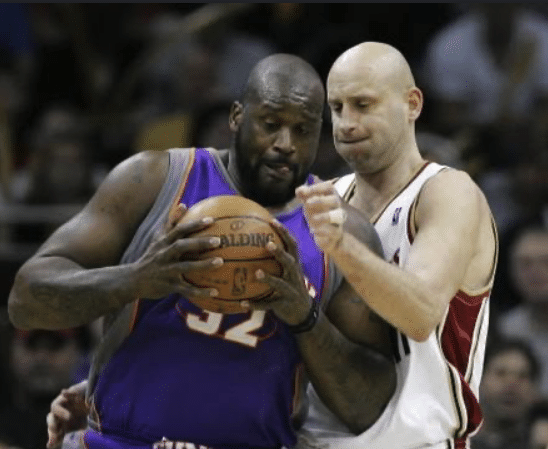
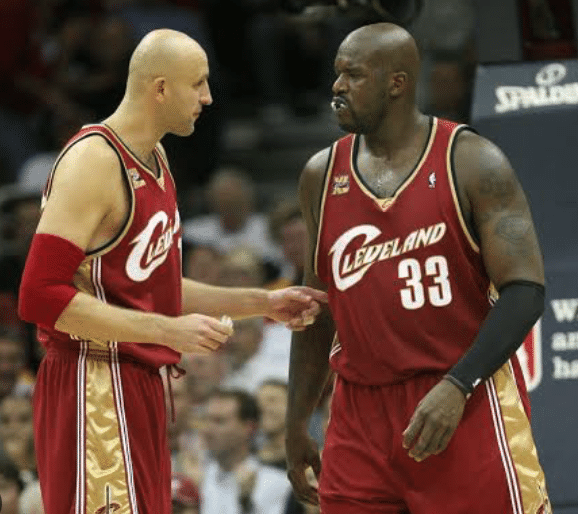
O’Neal also fondly remembered former Cleveland Cavaliers teammate Zydrunas Ilgauskas, better known to NBA fans as “Big Z.”
Shaq called Ilgauskas a joy to play alongside and recalled how professionally he handled O’Neal’s arrival in Cleveland. Although Shaq moved into the starting position, Ilgauskas never complained or created problems.
O’Neal also remembered how difficult Big Z had been to defend earlier in his career, before foot injuries slowed him down.
Shaq’s comments weren’t an attack on American basketball. They were a reminder that the sport has become truly global—and that skill, intelligence, toughness, and strong fundamentals can travel anywhere.
The big man position has changed dramatically since Shaq ruled the paint. But whether a center comes from Lithuania, Serbia, Cameroon, or the United States, the Big Aristotle’s message remains simple: athletic ability helps, but knowing how to play the game matters even more.