
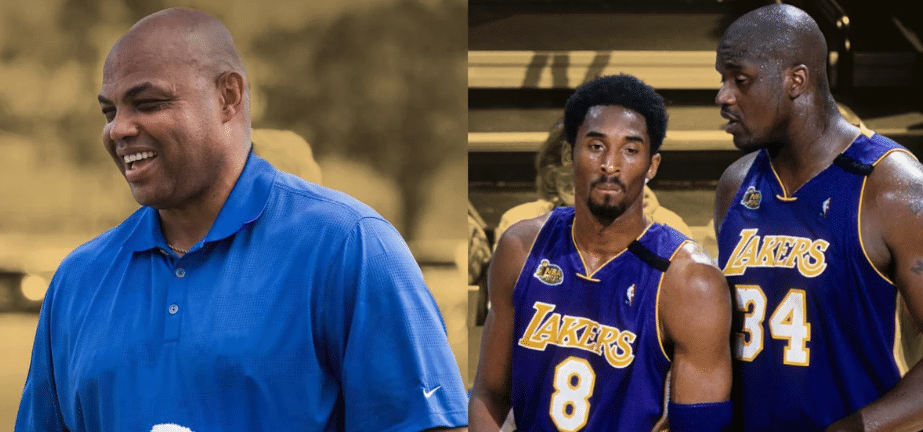
At the beginning of the 2000s, the Los Angeles Lakers weren’t simply winning basketball games. They were steamrolling through the NBA behind the nearly unstoppable combination of Shaquille O’Neal and Kobe Bryant.
After capturing the championship in 2000, Los Angeles did it again in 2001 and 2002, becoming only the fifth franchise in NBA history to complete a three-peat. Shaq was operating at the absolute height of his powers, collecting three consecutive NBA Finals MVP awards while treating opposing centers like mildly inconvenient furniture.
Kobe, meanwhile, was rapidly developing into one of basketball’s most complete superstars.
Together, they created one of the most dominant partnerships the league has ever seen. But according to Charles Barkley, one team from his playing days might have been able to stop them.
Barkley selected the 1985-86 Boston Celtics as the only team from his era capable of defeating the Shaq-and-Kobe Lakers.
That Boston squad certainly had the credentials to make the argument interesting. The Celtics finished the regular season with a 67-15 record, went an incredible 40-1 at home, and defeated the Houston Rockets to win the NBA championship.
They also had enough Hall of Fame talent to fill a very crowded limousine.
Larry Bird won his third consecutive NBA Most Valuable Player award and added Finals MVP honors after averaging 24 points, 9.7 rebounds, and 9.5 assists during the championship series. Joining him were Kevin McHale, Robert Parish, Dennis Johnson, and sixth man Bill Walton—all future Hall of Famers.
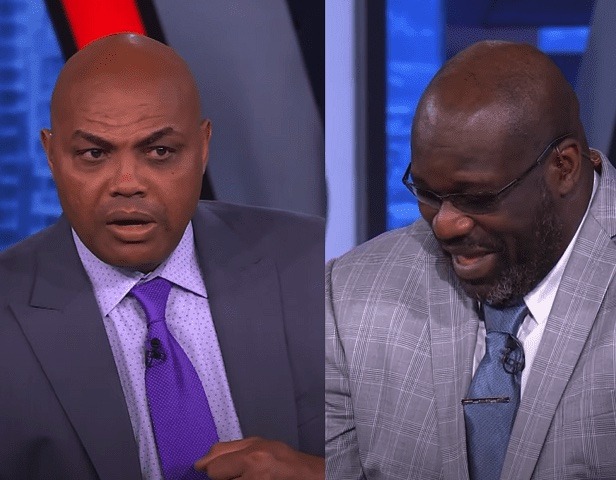

Barkley didn’t claim that Parish could shut down Shaq. Let’s be serious: nobody was “shutting down” the Big Aristotle during those championship seasons. Barkley’s argument was that Boston could rotate Parish and McHale against him, forcing Shaq to work at both ends of the floor.
Dennis Johnson, one of the era’s toughest defensive guards, would draw the uncomfortable assignment of guarding Kobe. Bird and McHale would then try to exploit their matchups against the Lakers’ forwards.
That sounds like a reasonable plan on paper. Of course, plenty of reasonable plans ended with Shaq hanging on the rim while the opposing center stared at the scoreboard.
Bird also believed Boston’s frontcourt gave the Celtics an advantage against other historically great teams. When broadcaster Bob Costas compared the 1995-96 Chicago Bulls with the greatest teams ever assembled, Bird pointed to Boston’s size and frontcourt talent as the reason the Celtics could have competed with Michael Jordan’s 72-win squad.
A front line featuring Bird, McHale, and Parish—with Walton coming off the bench—would create challenges for any team. The Celtics had size, passing, defense, rebounding, and championship experience at every position.
Would that have been enough to defeat Shaq and Kobe?
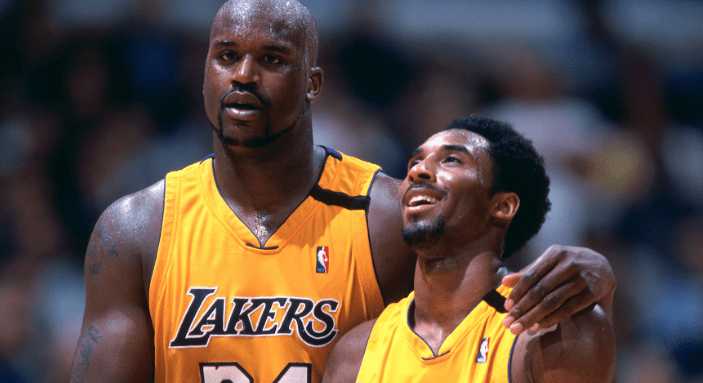
Boston might have made Shaq work harder than most teams could. But keeping him from controlling the series would have been another matter entirely. Once Shaq established position near the basket, even a lineup filled with Hall of Famers could quickly become a collection of very famous fouls.
The matchup will always remain one of basketball’s great hypothetical debates. Still, Barkley’s choice says plenty about both teams. The 1986 Celtics may have been the best-equipped challenger from his era—but Shaq’s Lakers remain the measuring stick that makes the argument worth having.